
Engineered Windproof Shading & Pergola Assemblies
Pre-engineered structural profiles built for high-velocity wind zones, luxury residential expansions, and multi-season commercial hospitality projects across the USA.
-
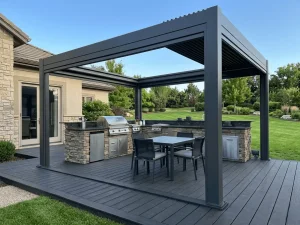 Luxury 180-Series Retractable Pergola for US Coastal EstatesView Product Specifications
-
 Architectural 180 Pergola for US Commercial Rooftops & Sky LoungesView Product Specifications
-
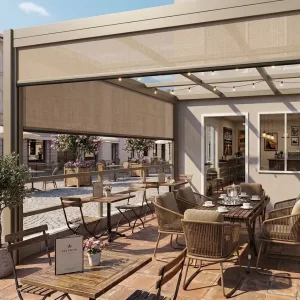 Commercial Windproof Zip Screens for US Restaurant Patios & DiningView Product Specifications
-
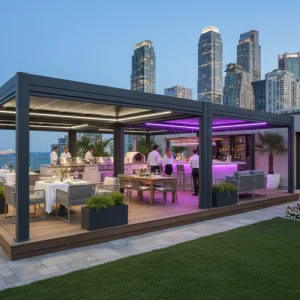 Modular Prefab Aluminum Pergola Kits for US Building Material WholesalersView Product Specifications
The United States Architectural Shading Landscape: Windproof Zip Blind Dynamics
Structural demands, thermal envelope regulations, and high-velocity wind performance driving North American exterior blind specification.
Across the United States, commercial developers, exterior shading contractors, and luxury residential homebuilders are transitioning rapidly from conventional vertical roller shades to windproof zip track blinds (zipper screens). Conventional dropsheets and wire-guided shades suffer from catastrophic fabric blowouts, noisy track rattling, and edge tear-outs when subjected to turbulent micro-climates. In contrasting meteorological regions—ranging from the high solar heat gain and hurricane-prone coasts of Florida, Texas, and the Gulf Coast to the high winds of the Pacific Northwest and the urban thermal updrafts of Chicago and New York—exterior sun protection must function as an integrated structural barrier.
In modern US building science, the exterior building envelope is under intense regulatory scrutiny. Standards such as ASHRAE 90.1, the International Energy Conservation Code (IECC), and California’s Building Energy Efficiency Standards (Title 24) emphasize reducing cooling loads prior to solar energy penetrating architectural glass. Exterior motorized windproof zipper screens stop up to 90% of solar heat gain and eliminate perimeter light gaps while maintaining optical clarity. The primary technical bottleneck for US distributors has historically been sourcing commercial-grade assemblies capable of passing ASTM E330 (Uniform Static Air Pressure Test) and enduring continuous 80–100 km/h wind shear without fabric separation from the vertical jambs.
Today, the zip blind functions not merely as decorative fenestration, but as an indispensable climate enclosure. By integrating continuous zip-welded edges into high-performance dual-channel side tracks equipped with internal dampening elastomer gaskets, our systems convert exterior patios, lanais, pergolas, and hospitality verandas into climate-controlled, pest-free, and code-compliant extensions of the interior envelope.
Global Industry Transformation & The Foshan Manufacturing Advantage
How precision vertical integration in China’s premier industrial cluster delivers superior cost efficiency, mechanical tolerances, and scale for US importers.
The global motorized exterior shading industry has evolved from artisanal, regional assembly toward standardized, modular industrial design. European design philosophies have long influenced aesthetic trends, but global scaling has been fundamentally empowered by the ultra-dense aluminum processing and precision engineering hub of Foshan, China. Sourcing directly from an established Tier-1 Chinese manufacturer gives US distributors and general contractors a decisive structural advantage over fragmented local fabricators.
In traditional US regional fabrication models, components are aggregated from multiple third-party suppliers: extrusions from domestic mills, motors from European distributors, fabrics from third-party slitters, and injection-molded plastic end-caps from specialized molders. This fragmented assembly chain introduces compounding dimensional tolerances, prolonged lead times (often 12–16 weeks), and inflated retail markups of 300% to 500%. In contrast, our vertically integrated Foshan manufacturing base operates complete industrial cohesion under a single enterprise management system:
Dedicated Dies & Billet Extrusion
We cast and extrude using virgin 6063-T6 aluminum billets. Our custom die profiles feature reinforced structural ribs, concealed fastener chambers, and integrated dual inner tracks designed to withstand significant dynamic deflection without plastic deformation.
Automated High-Frequency Welding
The mechanical integrity of a windproof zipper blind depends on the bond between the screen fabric and the flexible PVC/Keder zipper edge. Our high-frequency CNC automated hot-melt welding guarantees micro-level alignment, preventing fabric ripple and seam failure.
Architectural Powder Coating
Automated horizontal and vertical powder coating lines use premium AkzoNobel and Tiger Drylac architectural powders. Rated to Qualicoat Class 2 and AAMA 2604 standards, our finishes resist coastal salt-fog, UV degradation, chalking, and blistering.
Engineering Specifications & Material Testing Standards
Comprehensive technical data prepared for project architects, MEP consultants, and commercial enclosure estimators.
| System Component | Material Specification | Testing & Compliance Standards | Engineering Value & Performance Benefit |
|---|---|---|---|
| Structural Extrusions | Alloy 6063-T6, Wall thickness 2.0mm – 3.5mm | ASTM B221, EN 755-9, Qualicoat Class 2 | Zero deflection across spans up to 6.0m; reinforced anchor channels resist torsional loading. |
| Zip Retention Mechanism | Co-extruded high-density PVC zipper core with lubricated polyacetal side guides | Continuous cycle tested (>20,000 operations) under simulated cross-winds | Continuous edge engagement prevents blowout; dual internal buffer springs isolate motor torque. |
| Screen Fabric Mesh | Composite core yarn (30% Polyester / 70% PVC or coated Fiberglass), 1% to 5% Openness | NFPA 701, California Title 19, ASTM E84 Class A, Greenguard Gold | High tensile strength (>250 daN/5cm); blocks up to 98% of UV rays; resistant to fungal rot and mildew. |
| Bottom Weight Bar | Heavy-gauge extruded aluminum with hidden steel weighting ballast & hollow rubber seal | ASTM E330 static pressure, wind load Beaufort Scale 10–12 (up to 120 km/h) | Maintains uniform vertical textile tension; bottom bubble gasket compensates for irregular floor slopes. |
| Motorization & Controls | Heavy-duty tubular motors (Somfy, Dooya, or Matter-compatible IP44/IP55) | UL 325, CE, FCC, RoHS certified for North American electrical codes | Integrated obstacle detection prevents fabric bunching; auto-syncs with smart building hubs. |
| Fasteners & Hardware | Marine-grade AISI 316 / 304 Stainless Steel screws, pins, and mounting brackets | ASTM B117 1,000-Hour Salt Spray Testing without red rust oxidation | Eliminates galvanic corrosion against aluminum; engineered for coastal, high-humidity deployment. |
Physics of Zip Retention vs. Dynamic Wind Load: The primary failure point of inferior motorized screens is track disengagement under sudden barometric pressure differentials. Our windproof zip blind uses an asymmetrical zipper edge welded directly to the textile boundary. This zipper travels within a floating polyacetal (POM) insert housed inside the primary structural extruded jamb. When cross-winds blow against the fabric plane, the outward pulling force wedges the zipper teeth against the interior shoulders of the track insert. Instead of dislodging, the higher the wind pressure, the tighter the zipper anchors into the retention profile.
American Commercial & Residential Regional Deployment
Tailored architectural solutions resolving regional climate vulnerabilities, from the Atlantic Seaboard to the Western Deserts.
Coastal Southeast: Florida & Gulf Coast
Focus: Wind-Shear & Bug Defense. Engineered to withstand coastal sea breezes, summer squalls, and relentless no-see-ums and mosquitoes. Combined with corrosion-resistant powder coats and 316 hardware, these shades enclose poolside lanais and covered porches effortlessly.
Sunbelt & Desert Southwest: TX, AZ, NV, CA
Focus: Solar Radiation & HVAC Reduction. In regions where daytime temperatures regularly exceed 100°F (38°C), our 1% openness high-performance screen textiles block infrared heat penetration, keeping covered patios 15–20°F cooler and protecting outdoor furnishings from UV degradation.
Northern & Urban Hospitality: NY, IL, WA, CO
Focus: 4-Season Revenue Maximization (RevPASH). Commercial restaurants and rooftop lounges utilize our motorized zipper screens paired with infrared radiant heaters to turn cold, breezy outdoor dining patios into cozy, weather-sealed revenue zones throughout late autumn and winter.
Industry Horizons: Smart Automation, Biophilic Enclosures & Energy Code Shifts
The convergence of IoT ecosystem integration, low-carbon fabrication, and performance architectural shading.
The motorized exterior screen industry is undergoing rapid technological transformation. Driven by smart building trends, several major design and engineering paradigms have emerged:
1. Matter Protocol & Native Smart Home Ecosystems: Gone are the days when exterior blinds operated exclusively via proprietary RF remotes. Leading American contractors specify tubular motors with integrated Matter-over-Thread or Zigbee 3.0 protocols. This enables windproof zip blinds to integrate directly into Control4, Crestron, Lutron, Apple Home, Google Home, and Amazon Alexa systems without costly bridge interfaces. Blinds now respond dynamically to real-time anemometer telemetry, closing automatically when UV thresholds are exceeded, and retracting into safety cassettes during microburst events.
2. Biophilic Fenestration with Micro-Perforated Composites: Contemporary American architecture prioritizes biophilic design—maximizing natural sunlight and views while shielding against excessive heat and solar glare. Advanced composite yarns (PVC-coated fiberglass and high-tenacity polyester) utilize irregular twill and basket weave patterns to allow 100% outward visibility while blocking exterior view-in during daylight hours, delivering privacy without claustrophobic solid barriers.
3. Concealed In-Wall & Pocket Headbox Integration: High-end architectural designs increasingly demand invisible enclosures. Our factory designs specialized "pocket" headboxes and recessed side-jamb tracks that can be pre-cast into concrete pillars, embedded behind exterior stone veneer, or tucked into soffit framing. The result is a flush, monolithic architectural facade where zero mechanical hardware is visible when the screen is retracted.
The Global Buyer’s Guide: Specifying Windproof Zip Blinds for US Importers
Key quality control checkpoints, logistics strategies, and technical criteria for sourcing directly from China.
1. Verify Alloy & Wall Thickness
Never accept lightweight extrusions below 1.8mm for commercial spans. Ensure mill test certificates verify 6063-T6 aluminum. Lower grades or high recycled scrap ratios result in stress cracking, deflection, and premature structural failure under heavy wind loads.
2. Inspect High-Frequency Welds
Request micro-photographs or physical samples of the zipper-to-fabric weld line. Premium welds feature complete polymeric fusion without burning, puckering, or visible thread fraying, ensuring uniform wind-load distribution across the full vertical edge.
3. Optimize Packaging & Ocean Logistics
Extrusions are susceptible to transit scratches and denting. Demand full honeycomb cardboard wrapping, protective polyethylene surface films, and robust fumigated solid-plywood crate packaging. Consolidating screens with aluminum pergolas saves up to 40% on container freight costs.
Frequently Asked Technical & Procurement Questions (FAQ)
Direct answers for architects, installation contractors, distributors, and procurement managers evaluating our windproof zip screen systems.
Integrated Pergolas, Commercial Blinds & Patio Enclosure Systems
Engineered to consolidate seamlessly with our windproof zip blinds for mixed-container shipments and holistic outdoor living packages.
-
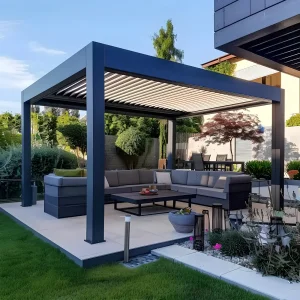 Model 175 Outdoor Kitchen Shade Pavilion for American BBQ & Patio LivingView Product Specifications
-
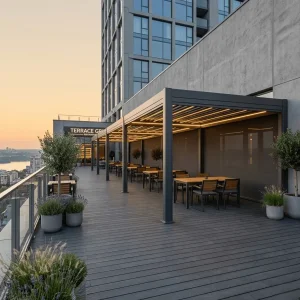 Industrial 220mm Bioclimatic Louvered System for US Hospitality & ResortsView Product Specifications
-
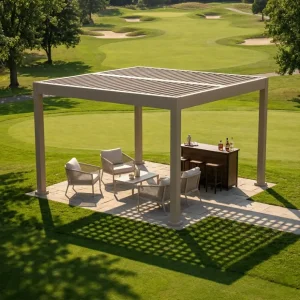 Architectural Louvered Pergola for North American Residential & Retail ProjectsView Product Specifications
-
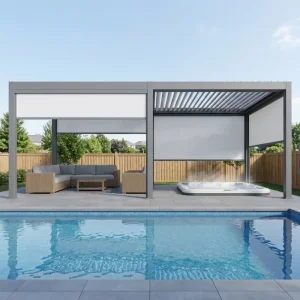 Motorized Zip Track Shading Systems for US Outdoor Kitchens & VerandasView Product Specifications
-
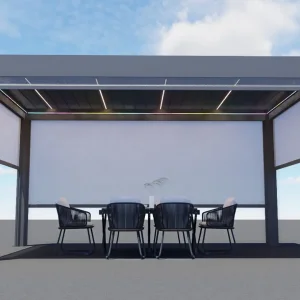 Engineered Motorized External Roller Blinds for High-Rise US Commercial FacadesView Product Specifications
-
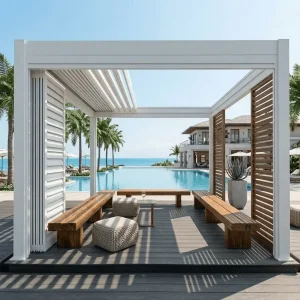 Contractor-Grade 180 Extruded Pergola for US Structural Building SpecificationsView Product Specifications
-
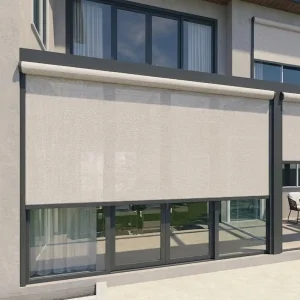 All-Weather Motorized Zip Screen Enclosures for American Patio Living RoomsView Product Specifications
-
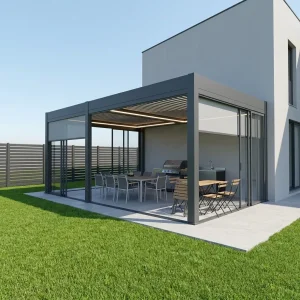 Waterproof Louvered Roof Pergola Kits for US Homebuilders & Deck ContractorsView Product Specifications
Partner with China's Premier Shading Engineering Factory
Direct factory pricing, custom OEM submittals, full container consolidation, and engineering support for US distributors, exterior living dealers, and commercial general contractors.
Send Inquiry Now