Wholesale Motorized Windproof Shading Tracks For Custom Outdoor Kitchens Manufacturers, Factory
Product Description
Raw Materials: The Difference Between Cheap Mesh and Structural Fabric
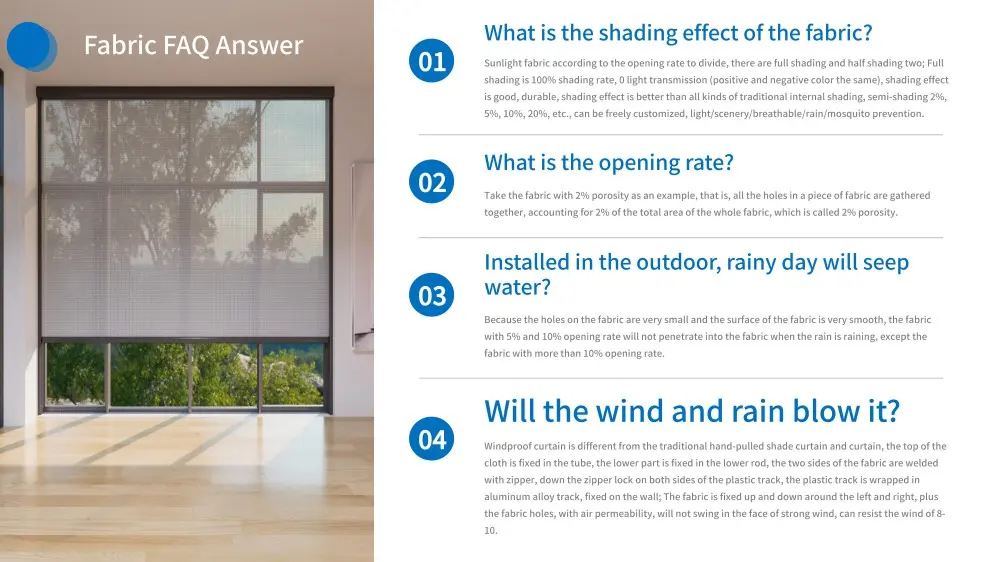
The life expectancy of an outdoor shading system is decided long before the product arrives at the job site. Most cheap imports use standard polyester fabrics that stretch out of shape after a single season of sun exposure. Once the fabric stretches, it begins to sag, causing tracking errors and eventually jamming inside the vertical guides. Our production process eliminates this issue by starting with high-tenacity core polyester yarns. These yarns are woven on high-tension industrial looms to ensure the weave pattern is perfectly consistent from the top of the roll to the bottom.
After weaving, this base mesh goes through a specialized thermal extrusion line where every single strand is coated in liquefied PVC. This deep encapsulation process means that moisture, grease, and airborne dirt cannot penetrate the core polyester fibers. If grease from an outdoor grill splashes onto the screen, it sits on the non-porous PVC surface where it can be wiped away with soap and water, rather than soaking into the fabric and causing permanent stains. For commercial projects, we blend non-toxic, self-extinguishing fire-retardant agents directly into the PVC bath during this stage, ensuring that the finished screen complies with major international building safety codes.
Side-Channel Locking: How We Prevent Fabric Blowouts
To understand why this system can handle heavy coastal winds without rattling, you have to look at the mechanical connection inside the side tracks. Traditional outdoor roller blinds rely on gravity or basic cable guides, which allow the fabric to bow and flap like a sail when the wind picks up. This flapping puts massive strain on the top tube and motor, often causing premature mechanical failure.
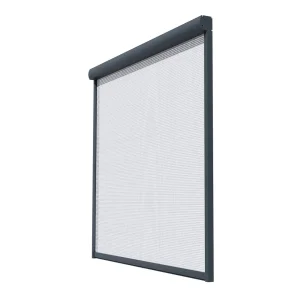
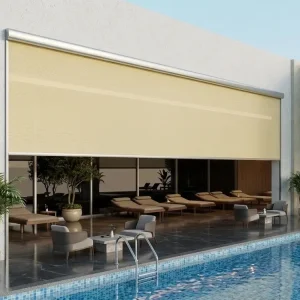
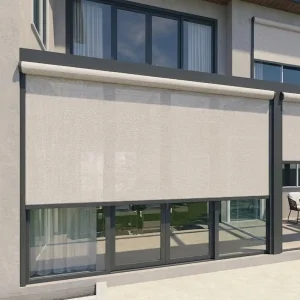
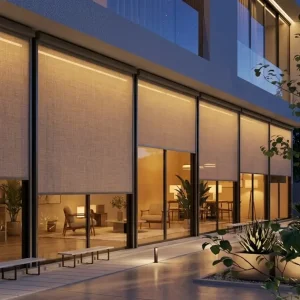
Our system uses a continuous side-lock design. We high-frequency weld a flexible, high-strength PVC zipper profile directly to the left and right edges of the fabric. This zipper runs inside a self-lubricating polymer inner guide that sits inside the extruded aluminum side track. When wind pushes against the face of the screen, the horizontal load is distributed evenly along the entire height of the vertical tracks. The frame parts—including the headbox, side channels, and bottom bar—are extruded from 6063-T5 aluminum alloy. We finish these components with an architectural-grade powder coating that resists salt-air corrosion, cracking, and peeling. The bottom bar contains internal steel weights to keep the screen flat and is finished with a soft rubber gasket that seals tight against uneven stone tiles or outdoor countertops.
Real Field Performance: The Windy Coastal Backyard
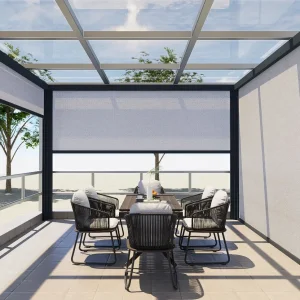
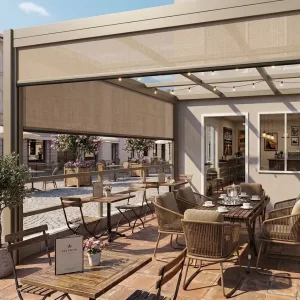
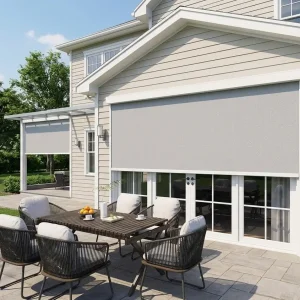
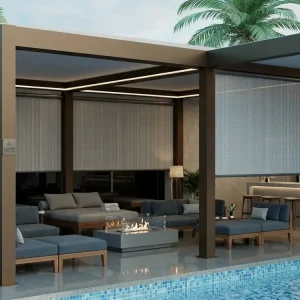
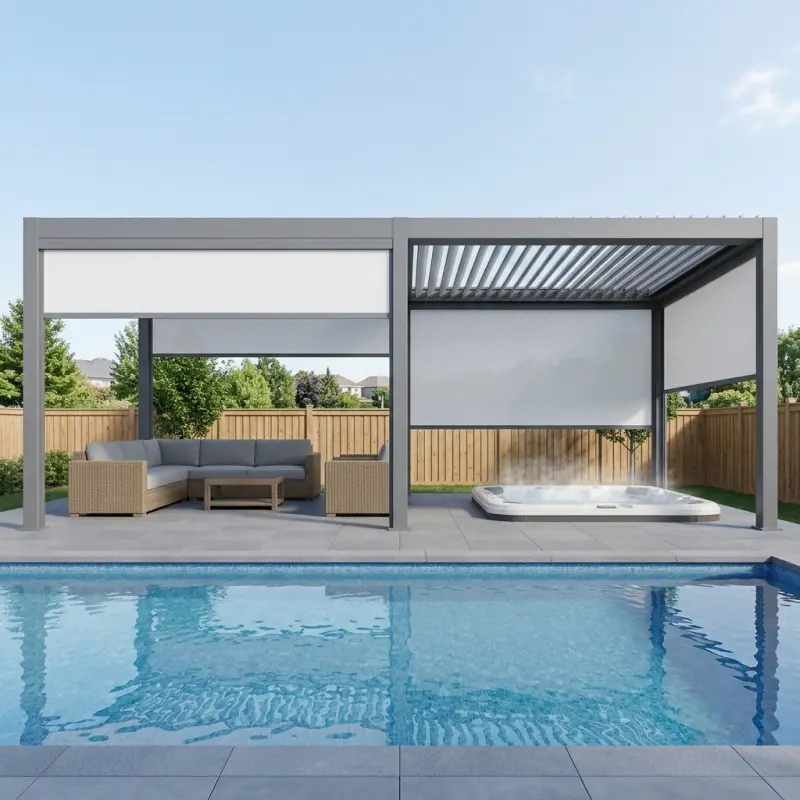
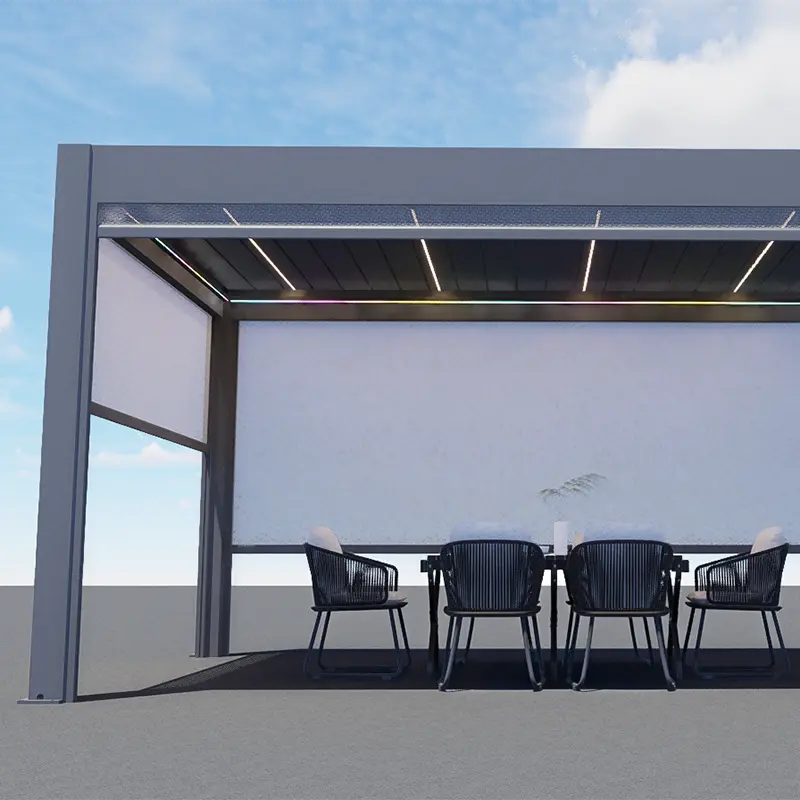
Let's look at a common installation scenario. A homeowner builds a custom outdoor kitchen under a freestanding aluminum pergola in a windy coastal area. The space features high-end stainless steel appliances, marble countertops, and a large dining table. During a late afternoon gathering, a strong, dusty wind starts blowing from the coast, carrying dry leaves and making it difficult to control the flame on the gas grill.
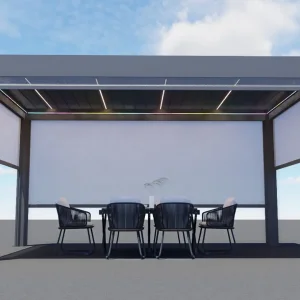
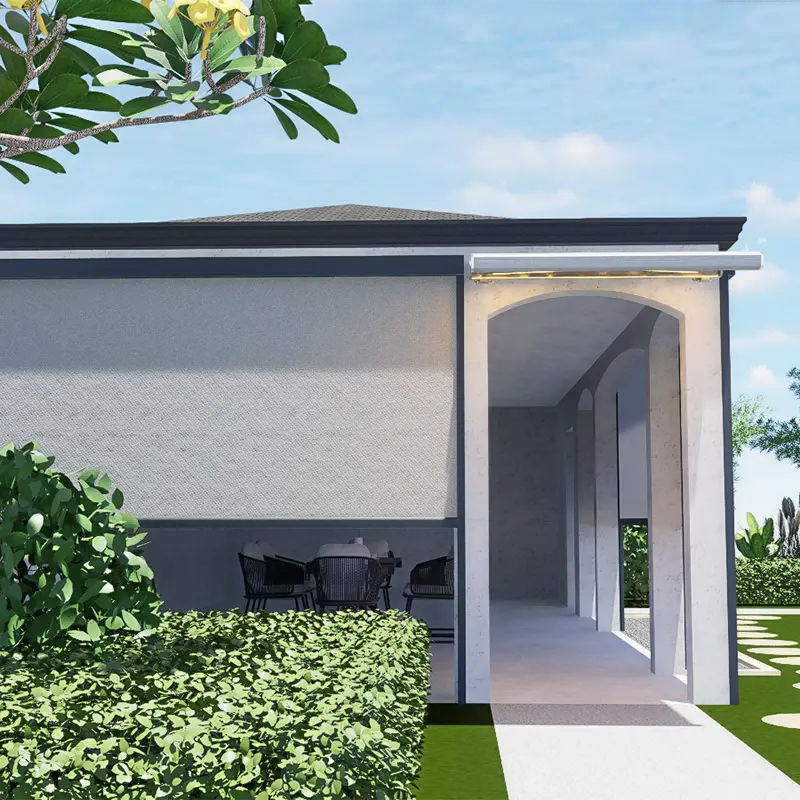
By lowering the motorized roller shutter, the host can completely close off the windward sides of the pergola. The zip screen locks tight inside the side channels, immediately stopping the wind and airborne dirt. Because the fabric maintains an optimal openness factor, smoke from the grill still ventilates out easily without blowing back into the guests' faces. The screen also acts as a secure curtain against mosquitoes and other pests as night falls, allowing the dinner to proceed in clean comfort. When the dinner is over, the screens roll up neatly into their aluminum headbox, restoring the open-air layout.
B2B Distribution: Simplified Installation for Trade Crews
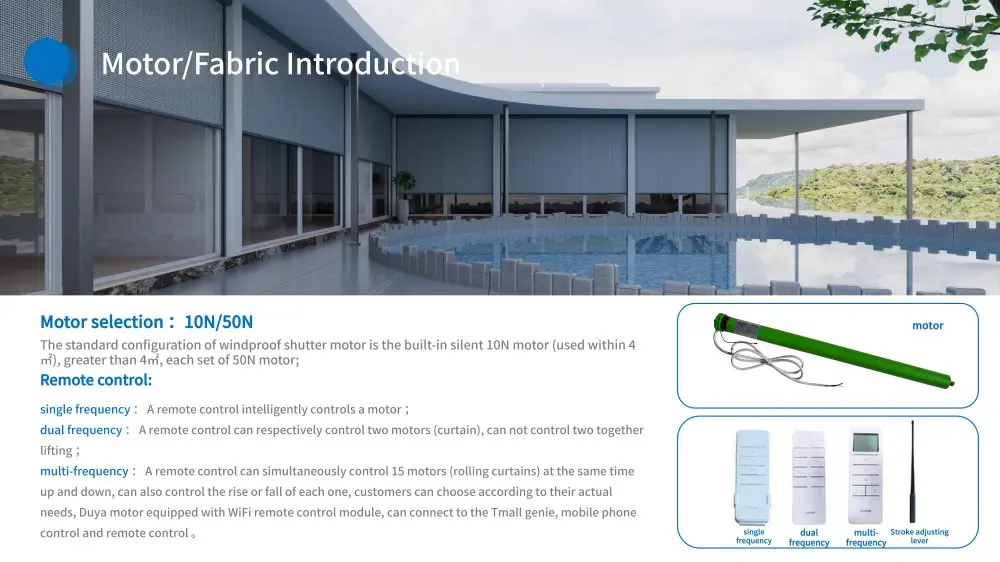
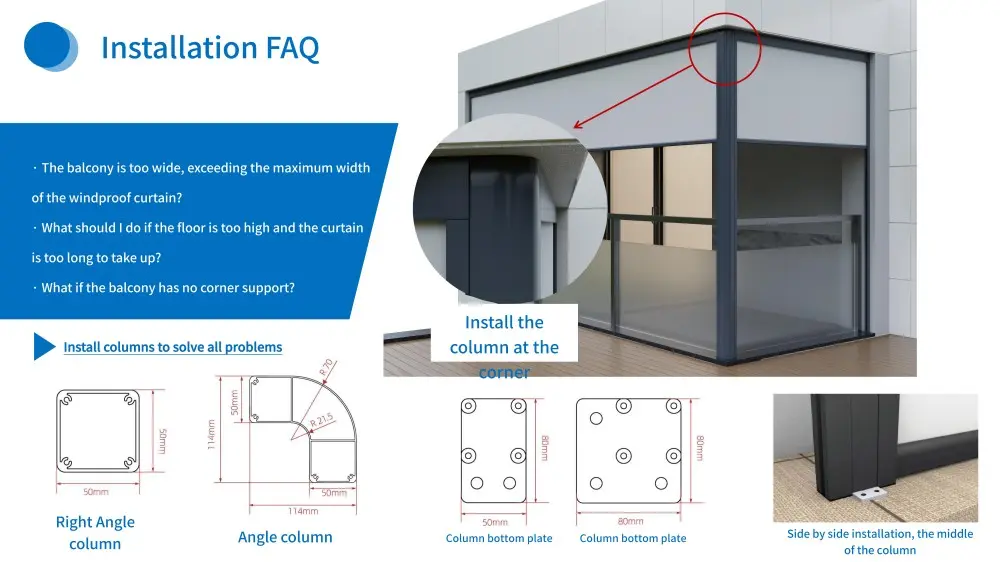
We supply custom-sized, contract-grade windproof shading systems to trade professionals, including general contractors, landscape architects, and exterior shading retailers. We understand that field installation time represents a direct labor cost, which is why our products are delivered pre-assembled where possible, with pre-drilled side channels and plug-and-play motor wiring.
We provide our B2B partners with technical support, including CAD integration files, detailed wiring diagrams, and custom frame color-matching to align with standard industry colors. By including our motorized roller blinds in your project quotes, you can offer clients a complete, high-margin, all-weather outdoor living package under a single contract. This reduces the time your team spends sourcing separate parts and ensures that all components work together perfectly from day one.
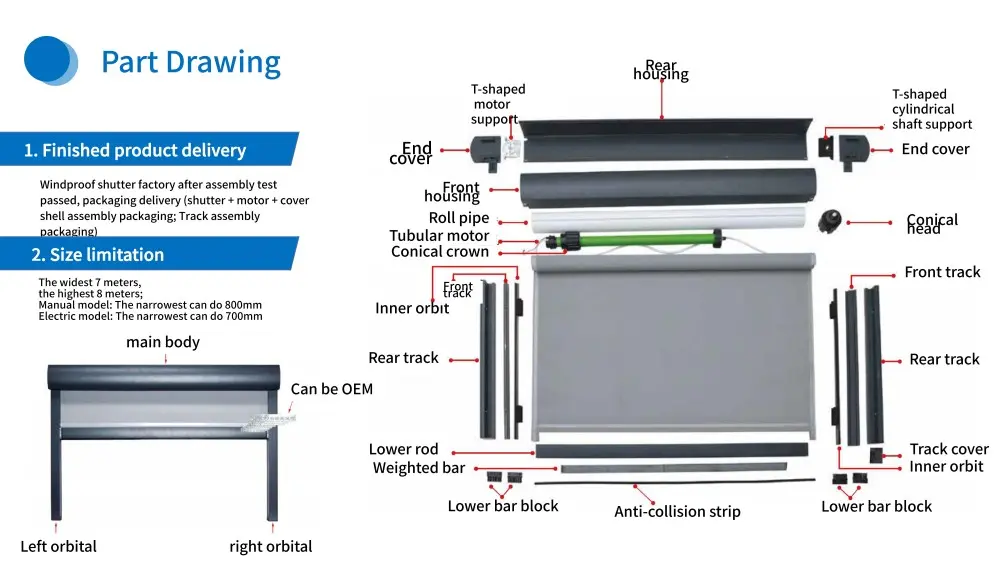
Engineering & Installation Showcase


Questions About Windproof Zipper Systems
Unlike gravity or cable systems, our blinds feature a high-frequency welded PVC zipper along both sides of the screen. This zipper locks securely into a polymer guide seated inside heavy-duty aluminum side channels, evenly dispersing wind pressure across the vertical length and preventing fabric blowouts.
We use high-tenacity core polyester yarns woven on industrial high-tension looms, followed by liquid PVC encapsulation via a thermal extrusion line. This construction locks the weave dimensionally, eliminating sagging while creating a stain-proof, waterproof barrier that is easy to wipe clean.
Yes. All frame components—including the headbox, side channels, and bottom rail—are precision extruded from 6063-T5 aluminum alloy and coated with architectural-grade powder coating designed specifically to resist salt air, UV exposure, cracking, and peeling.
The system effectively blocks sudden crosswinds to stabilize grill flames while maintaining an engineered openness factor that lets smoke disperse naturally. Additionally, flame retardants are integrated directly into the fabric coating to meet international commercial safety regulations.
We supply custom-measured units pre-assembled with pre-drilled side channels and plug-and-play wiring to reduce on-site labor. Partners also receive technical CAD files, wiring schematics, and custom frame color matching.