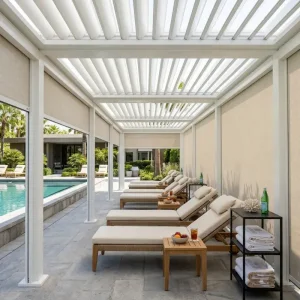
Commercial Envelope Systems Tailored for Uzbekistan Projects
Heavy-duty side channel systems, bioclimatic louvered integrations, and exterior zip screens designed to withstand extreme continental thermal expansion and fine dust infiltration.
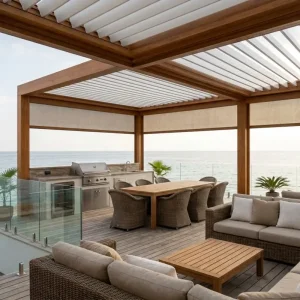
Commercial Side Channel Zip Blinds for Uzbekistan Cafe Enclosures
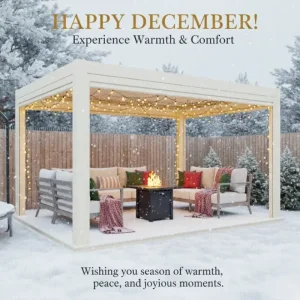
Smart Motorized Louvered Bioclimatic System with Integrated Zip Screens
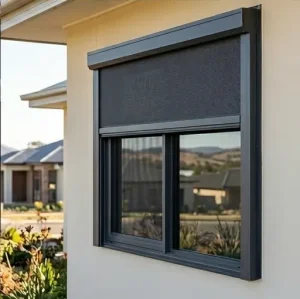
Motorized Exterior Zip Screen for Restaurant Patio Climate Control
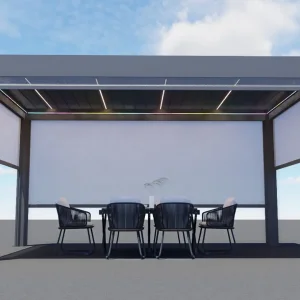
Advanced Motorized Roller Blinds for Dust & Wind Environmental Isolation
The Architectural Renaissance of Uzbekistan: Microclimate Challenges & Shading Engineering
Analyzing the intersection of Central Asia's rapid urban modernization, hospitality infrastructure expansion, and severe continental weather patterns.
Key Takeaway for General Contractors & EPC Consortiums in Uzbekistan
Deploying certified motorized zip screen systems provides immediate dual-layer benefits: it secures full usable floor area for hospitality terraces year-round without requiring costly brick-and-mortar extensions, while cutting solar heat gain coefficient (SHGC) values by up to 85%, significantly lowering chiller operational expenditures across large commercial assets.
Structural Engineering of Windproof Zip Enclosures
Dissecting the mechanical tolerances, extrusion alloy specifications, and screen fabric physics designed for high-stress environmental protection.
Continuous Zip Lock Dynamics
Utilizes ultrasonic high-frequency welding to affix heavy-duty polymer zip teeth directly onto the fabric edge. The teeth engage within an extruded co-extruded PVC inner cushion that absorbs wind gust kinetic energy, distributing mechanical tension equally down the vertical profile.
Alloy 6063-T6 Extruded Profiles
Structural cassette boxes, bottom weighted drop bars, and two-piece split side guides are manufactured from aerospace-grade 6063-T6 virgin aluminum alloy. Minimum wall thicknesses of 2.0mm to 2.8mm ensure resistance against structural deflection under heavy gusts up to 120 km/h.
Micro-Perforated Thermal Fabrics
Screen textiles utilize PVC-coated fiberglass composite yarns or high-tenacity polyester core matrices (Sergé, Soltis, or equivalent high-stability weaves). Available in 1%, 3%, and 5% openness factors to simultaneously block 95% of UV radiation while maintaining external optical clarity.
| Engineering Parameter | Commercial Grade Specification | Heavy Industrial / High-Rise Grade | Central Asia Field Performance |
|---|---|---|---|
| Wind Load Resistance | Class 3 (EN 13561) ~ 90 km/h | Class 6+ (EN 13561) ~ 125 km/h | Resists intense Garmsil gust fronts without blowout |
| Extrusion Profile Finish | Qualicoat Class 1 Powder Coating | Qualicoat Class 2 / Anodized 25μm | Resistant to high UV chalking, alkali soils & sand scour |
| Motorization & Smart Control | Tubular Motor with Obstacle Detection | RS485 / Modbus / Zigbee / Somfy RTS | Integrates with building automation (BMS) systems |
| Maximum Single Span | Width: 4.5m | Height: 3.5m | Width: 6.0m | Height: 5.0m | Accommodates vast hotel lobbies and multi-bay cafes |
| Dust Ingress Protection | Dual Internal Brush Gaskets | EPDM + Co-extruded Elastomer Seals | Hermetic sealing against PM10 / PM2.5 desert dust |
Enterprise Solutions Across Core Commercial Sectors
Delivering high-ROI exterior shading and weather-isolation hardware across diverse commercial environments throughout Uzbekistan.
Hospitality & HoReCa Growth
For restaurants and cafes in Tashkent's Mirzo Ulugbek and Yakkasaray districts, outdoor dining terraces represent over 40% of seat capacity. Windproof zip blinds convert seasonal open-air patios into climate-controlled dining rooms, shielding patrons from noon heat waves and abrupt dust storms.
Grade-A Office Towers & Glazed Facades
Commercial high-rises suffer from severe internal solar heat gain through curtain wall glazing. Retrofitting exterior zip screens reduces surface glass temperatures by up to 18°C, eliminating glare on computer screens and cutting summer HVAC peak electrical demands by substantial margins.
Luxury Villas & Gated Communities
Residential compounds in suburban Tashkent and Samarkand incorporate expansive bioclimatic pergolas, outdoor barbecues, and infinity pool lounges. Zip blinds deliver essential insect screening, private perimeter shading, and motorized windbreak protection without impeding garden views.
Compliance, Seismic Integrity & Direct Supply Chain Logistics
Addressing the specific regulatory frameworks of the Republic of Uzbekistan, building standards, and cross-border transport corridors.
SNiP (KMK) Standards & Seismic Compliance
Uzbekistan is situated in an active seismic belt (MSK-64 scale seismic zones 7, 8, and 9 in Tashkent and the Fergana Valley). External architectural attachments must strictly adhere to KMK 2.01.03-96 (Earthquake Resistant Construction). Our zip screen systems are engineered with dynamic seismic expansion anchor brackets and slotted connection flanges that accommodate building drift and differential deflection during micro-tremors without fracturing structural joints.
Belt & Road Rail Freight Corridor (China to Uzbekistan)
Direct multimodal shipping routes from our advanced manufacturing facilities in Foshan to Tashkent via the Khorgos Dry Port and Central Asia railway corridor ensure reliable door-to-door transit times within 14–18 calendar days. All shipments include complete documentation for smooth customs clearance through Uzstandard (O'zstandart), including CE conformity, fire retardancy certifications (NFPA 701, DIN 4102-B1), and comprehensive installation shop drawings in Russian and English.
AI-Driven Bioclimatic Automation & Next-Gen Smart Facades
Pioneering the evolution of intelligent building envelopes through predictive environmental algorithms and decentralized sensor clusters.
Phase I: Predictive Weather Micro-Sensors (Current Deployment)
Integration of multi-axis anemometers, optical rain sensors, and irradiance detectors. If wind velocities cross 60 km/h during sudden storm events, zip screens automatically lower or raise into protective cassettes to preserve structural integrity without human intervention.
Phase II: AI Sun-Position Tracking & BMS Dynamic Optimization
Machine-learning-assisted solar algorithms dynamically adjust blind drop heights throughout the day based on solar zenith angles and internal room occupancy. Minimizes internal cooling loads while maximizing natural daylight harvest to comply with green building certifications (LEED / BREEAM).
Phase III: Nanotech Self-Cleaning Fabrics & Photovoltaic Fabrics
Developing hydrophobic and anti-static titanium dioxide (TiO2) coatings specifically tailored for Central Asian arid regions. Airborne dust washes away with minimal rain or light misting, preventing chalky mineral build-up and preserving aesthetic luxury over decades.
Frequently Asked Engineering & Procurement Questions
Essential guidance for architects, facade consultants, and general contractors specifying windproof zip blinds for Central Asian projects.
How do zipper blinds withstand intense sandstorms in Uzbekistan?
Unlike conventional roller blinds where fabric edges sit loosely in U-channels, our zipper blinds employ continuous high-frequency welded zipper teeth locked into an internal floating PVC damper within extruded aluminum channels. When high wind pushes the fabric, tension increases evenly along the entire height rather than popping out. Internal dual-fin brush seals prevent fine loess dust from entering the track mechanism.
Can the zip screens be integrated into bioclimatic aluminum pergolas?
Yes. Our systems are engineered with modular concealed cassette enclosures designed to mount flush underneath pergola perimeter beams or integrate directly into structural columns. This provides an aesthetically seamless, completely enclosed four-season outdoor living space with automated motor synchronization via a single multi-channel remote or mobile app.
What is the lead time and freight route for delivery to Tashkent?
Production cycles for customized, mill-accurate dimensions and custom RAL powder coatings range from 12 to 18 business days. Transit from our factory via direct railway container freight through Khorgos to Chukursay / Sergeli logistics terminals in Tashkent takes approximately 14 to 18 days, facilitating predictable project execution schedules.
How do extreme winter temperatures (-20°C) affect motor operation?
We specify heavy-duty tubular motors equipped with low-temperature synthetic lubricants, anti-freeze gearboxes, and Class H thermal insulation ratings. Electronic torque-sensing stops the motor immediately if the bottom bar is obstructed by ground ice, protecting both the motor armature and the textile matrix from overload.
Engineered Pergola Structures & Compatible Shade Assemblies
Complete product matrices providing structural pergolas, high-wind certified louvered roofs, and integrated shading tracks for regional commercial projects.
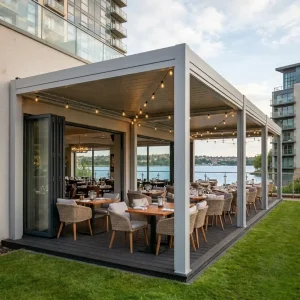
Structural Grade 175mm Louvered Pergola Certified for Severe Wind Loads
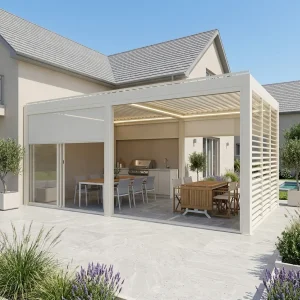
Motorized Aluminum Louvered Pergola Kit for Outdoor Kitchens & Patios
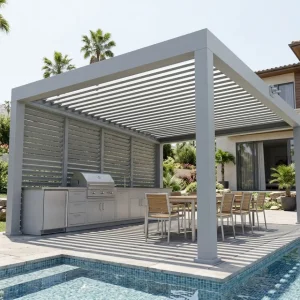
Commercial Aluminum Louvered Pergola for Hotel & Restaurant Dining
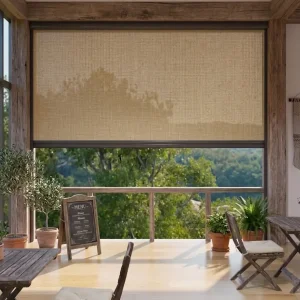
All-Weather Windproof Zipper Blinds for Outdoor Terrace Enclosures
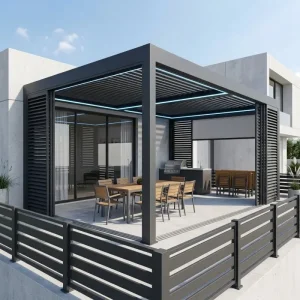
Contractor-Grade Commercial B2B Aluminum Louvered Pergola Supply
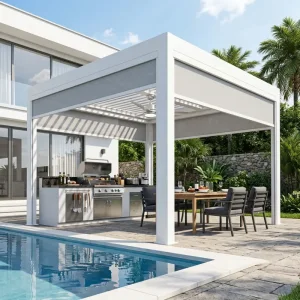
Integrated Shading Tracks for Structural Architectural Pergola Systems
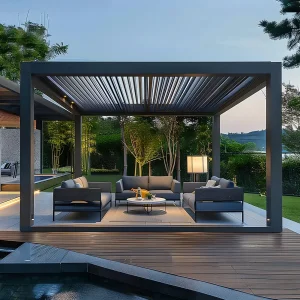
Electric Flip Louver Pergola for Commercial Terrace & Deck Extensions