
High-Efficiency Motorized Roller Blinds Engineered for Portugal
Pre-configured internal and external solar shielding matrices optimized for high ambient irradiation zones in Lisbon, Porto, and the Algarve.
-
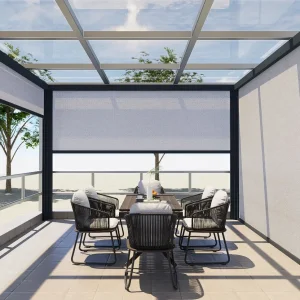 Smart Building SeriesWholesale Electric Roller Blinds: The Future of Smart Buildings for Portugal
Automated bi-directional communication blinds equipped with RTS/Zigbee protocol for unified Portuguese BMS integration.
-
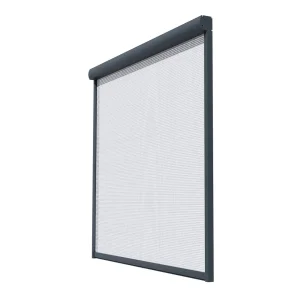 Heavy-Duty ProtectionCustom Premium Electric Roller Blinds: Total Solar Defense in Portugal
Multi-layer blackout and solar reflection composite fabrics engineered for harsh southern European exposure.
-
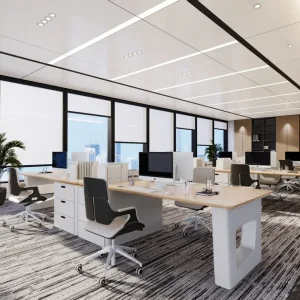 Acoustic & ComfortWholesale Electric Roller Blinds: Smart Living Spaces across Iberia
Precision micro-perforated composite cores managing glare and maintaining external visual contact for upscale living spaces.
-
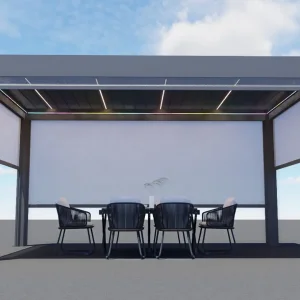 Commercial GradeAdvanced Motorized Roller Blinds: Commercial Facades Serving Portugal
Reinforced dual-barrel motorized arrays designed for extensive vertical spans in Portuguese retail and corporate hubs.
The Portuguese Commercial & Architectural Fenestration Reality
Portugal’s unique intersection of high solar radiation, maritime Atlantic salinity, and stringent EU building efficiency mandates creates a demanding operating environment for exterior and interior roller blinds.
Solar Envelope Optimization
With an average of over 2,800 to 3,000 hours of annual sunlight in the Algarve and Alentejo regions, building thermal loads are extraordinarily high. Portuguese architects increasingly reject internal HVAC over-sizing, relying instead on high-performance exterior roller blinds to slash cooling energy demands by up to 58%.
Hospitality & Urban Regeneration
The continuous revitalization of Lisbon's Baixa and Porto's historical districts demands low-profile, non-invasive shading systems that respect municipal heritage regulations. Concurrently, the boom in luxury resorts across Cascais, Comporta, and Vilamoura requires motorized perimeter screens capable of withstanding ocean squalls.
Atlantic Salinity & Wind Loads
Exterior roller blinds and zip screens deployed along Portugal's western Atlantic coastline must endure persistent, salt-laden micro-climates and gusting winds (Nortada). Standard powder coatings degrade rapidly; Qualicoat Seaside-class pre-treatment and 316 stainless hardware are baseline necessities.
Procurement Challenges Faced by Portuguese Tier-1 Contractors
Global development groups and Portuguese EPC firms confront severe trade-offs between exorbitant domestic/European fabricator markups and standard Asian import quality volatility. A specialized factory direct model bridges this gap.
Deflection control on spans exceeding 4000mm requires engineered wall thicknesses (≥2.0mm) to prevent fabric sag or motor axle failure under high ambient thermal expansion.
High-tenacity fiberglass or polyester cores coated with UV-stabilized PVC/PVDF ensure zero degradation under high UV index (UVI 8-10) prevalent throughout southern Portugal.
Custom barcoded tagging down to the individual room or façade elevation, delivered straight to ports in Sines, Lisbon, or Leixões, bypassing layered European middlemen.
Engineering Value Comparison
Comparing standardized local assembly against factory-direct engineering pipelines serving Portugal:
Engineering Roadmap: The Next Era of Kinetic Facades
Transitioning from static window treatments to active, bioclimatic envelope nodes responsive to micro-climate telemetry.
AI-Driven Predictive Shading
Integration with local meteorological radar arrays in Portugal. Blinds automatically adjust inclination and deploy status based on real-time solar positioning, predicted cloud cover, and convective wind velocity spikes.
Aerogel & Low-E Screen Composites
Incorporating nano-aerogel binders into technical textiles. This achieves ultra-thin roll diameters inside low-profile cassette extrusions (85mm–100mm) while matching the thermal resistance of double glazing.
Photovoltaic Self-Powered Actuation
Monocrystalline PV cells integrated seamlessly into exterior blind cassettes, paired with solid-state lithium-iron-phosphate (LiFePO4) storage for zero-wire retrofits across historical Lisbon masonry.
Portuguese & European Regulatory Conformance Framework
Eliminating liability for installers, architects, and main contractors through rigorous certification protocols.
EN 13561 & EN 1932 Standards
Certified mechanical wind load resistance testing verifying structural integrity at sustained wind speeds and extreme gusts common in the Atlantic coastal corridor.
REH / RECS Portuguese Compliance
Full documentation of gtot, solar transmittance (Ts), and solar reflectance (Rs) values to satisfy Portuguese building thermal efficiency accreditation (SCE).
Flame Retardancy: EN 13501-1
Class B-s1, d0 fire rating certification on all high-performance exterior and interior technical textiles for public buildings, hotels, and healthcare institutions.
High-Performance Zip Screens & Architectural Perimeter Solutions
Heavy-duty, precision-machined vertical track enclosures and weather barriers serving installations across Portugal and the global market.
-
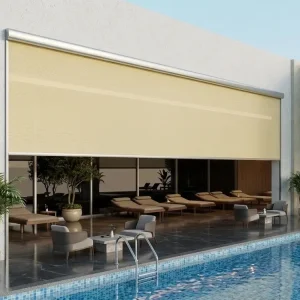 Heavy-Duty SpecCustom Heavy-Duty Zip Screens: Portugal High-Performance Series
Reinforced guide channels and internal damping springs for demanding outdoor environments.
-
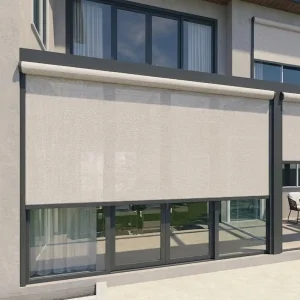 All-Weather LivingAll-Weather Enclosures: Custom Motorized Screens for Portuguese Terraces
Transform outdoor pergolas into year-round enclosed spaces with micro-climate insulation.
-
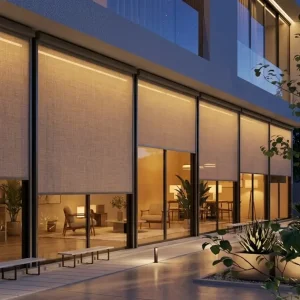 Facade IntegrationArchitectural Facade Zip Screens Serving Portuguese Developments
Concealed headboxes and flush side channels designed for minimalist Portuguese architecture.
-
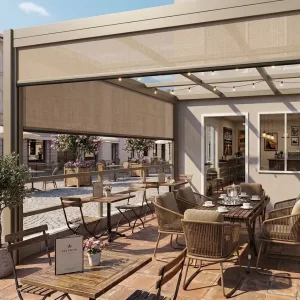 Hospitality ROICommercial Seating Windproof Zip Screens for Hospitality Portugal
Wind-sealed outdoor dining enclosures extending revenue seasons for cafes and restaurants.
-
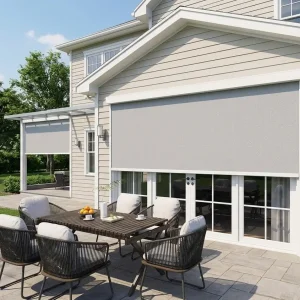 Extreme WeatherExtreme Weather Windproof Zip Screens: Atlantic Coastal Protection
Engineered for oceanfront installations subjected to persistent gale-force gusts.
-
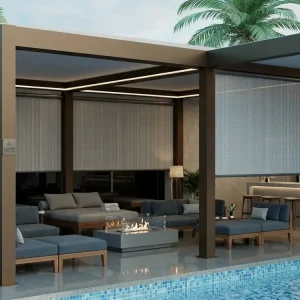 Pergola SpecificCustom Pergola Zip Screen Enclosures: Suppliers Serving Portugal
Direct integration packages tailored to bi-climatic aluminum pergola beam extrusions.
-
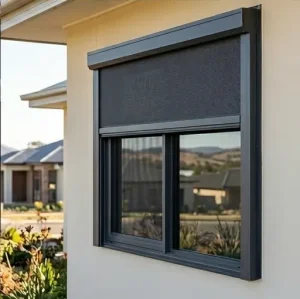 Patio ClimateExterior Zip Screens: Restaurant Patio Climate Control for Portugal
Automated vertical deployment for temperature control in high-volume hospitality zones.
-
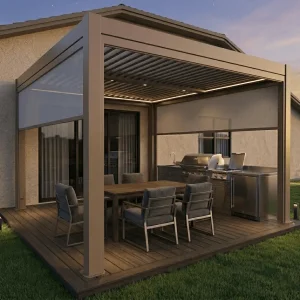 Residential EliteWholesale Motorized Patio Zip Screens: Windproof Residential Shading
Aesthetic, windproof vertical shading solutions for luxury residential developments.
Frequently Asked Questions: Sourcing Roller Blinds for Portugal
Key technical specifications, engineering limits, and logistical details for project planners and enterprise importers.